
Contact Us
How strong is aluminium composite panel?
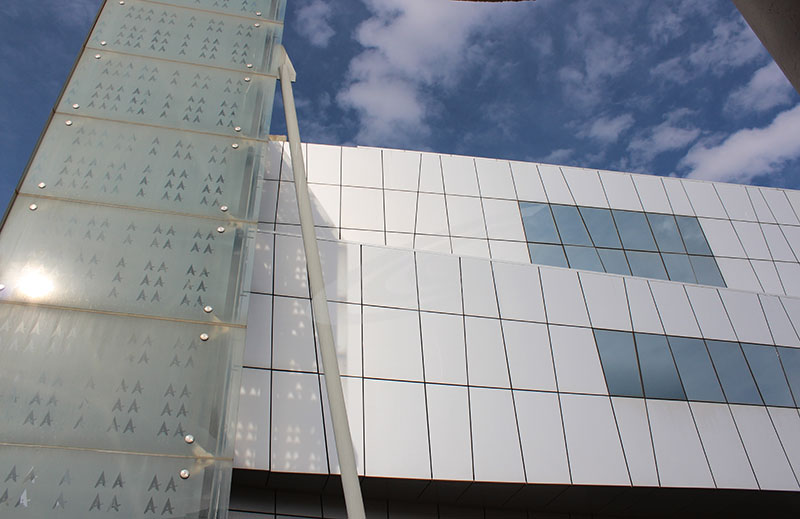
Aluminum composite panels have excellent mechanical properties, including bending strength, elastic modulus, penetration resistance, shear strength, and peel strength. Aluminum composite panels are often used in curtain walls and interior and exterior decoration projects. Especially in curtain walls, it plays the role of the building's peripheral structure, which needs to withstand loads caused by self weight, wind force, seismic force, and temperature changes. Due to the lightweight of aluminium composite panels, the influence of their own weight can be ignored. Wind force is the main variable load for vertical curtain walls, with values ranging from 2.0 to 5.0 kPa. In contrast, the impact of earthquakes on aluminium composite panels is minimal, even if calculated based on the highest seismic force, its value is only 0.1 to 0.8 kPa, far less than wind power.
So what we are more concerned about is the ability of aluminium composite panels to resist wind pressure. When the wind blows towards the aluminium composite panels from top to bottom, it mainly undergoes bending deformation. Therefore, bending strength and bending elastic modulus have become key indicators for determining the quality of aluminium composite panels for curtain walls.
In addition, the stress mode of aluminum composite panels is mainly shear, and their penetration resistance and shear force are also factors that we must focus on when designing the architecture. As for the peel strength, it represents an important characterization of the degree of tightness between the aluminum plate and the core material. If aluminium composite panels undergo significant deformation and warping due to their own or structural stress during long-term use, it will undoubtedly pose a great threat to the quality and safety of the building.
Our industry experts have mentioned that aluminium composite panels are made through unique metal and core material thermal composite technology, with excellent firmness. Of particular note is its surface coating design, which selects suitable materials according to the application scenario, such as common fluorocarbon coatings, polyester coatings, or acrylic coatings. Among them, fluorocarbon coatings are known for their excellent weathering resistance and are often used for the decoration and protection of building exterior walls. According to experimental verification, this type of product can be used normally for up to 20 years under harsh outdoor conditions.
Contact Us
Email: sales@jibond.com
Address: Intersection of Liu Niu Road and North of Guang'an Road, East District, Guangde Development Zone, Xinhang Town, Guangde City, Xuancheng City, Anhui Province
Service Hotline:



Follow us

Message